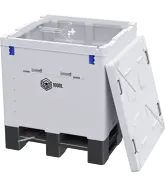
- 1155 x 1155 x 1287 mm
- Extremely hygienic
- Lightweight
- Foldable & stackable
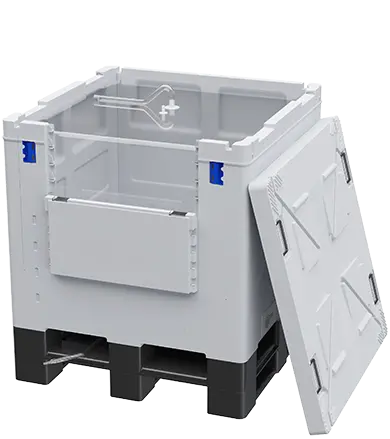
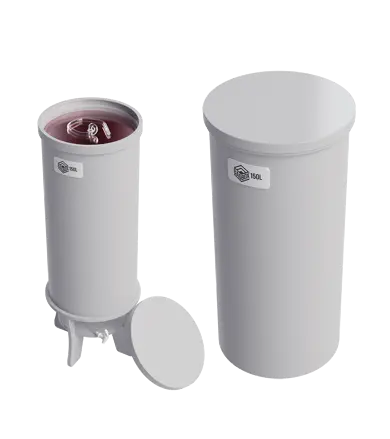

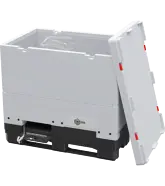
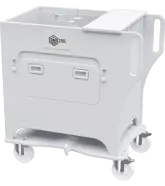
Engineered thermoplastic structure that stabilises SUT bags and protects the fluid path from fill through to transfer.
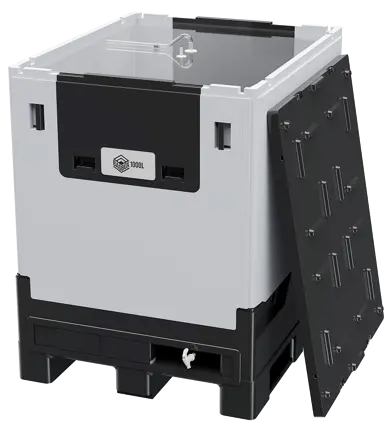
Mechanical safeguards and consistent interfaces that prevent batch loss and hold the sterile boundary throughout handling.
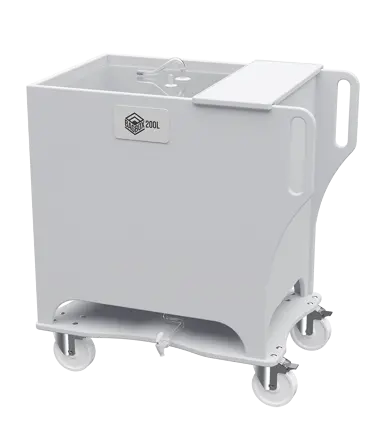
Lightweight, nestable and stackable carriers that accelerate batch changeovers and reduce cleanroom footprint.
A technical comparison of thermal stability, surface energy and total lifecycle cost across engineered thermoplastic and 316L stainless steel.
How mechanical safeguards and consistent port interfaces mitigate port stress and protect SUT bag integrity during fluid transfer.
What nesting density means for facility footprint, batch changeover speed and corporate sustainability targets.
Growth in biologics, GLP-1 manufacturing, ADCs and outsourced CDMO production is adding operational complexity faster than most facilities can absorb it. Single-use systems solved the cleaning problem. What they did not solve is everything around the bag: how it is supported, moved, drained and stored. That surrounding layer is execution infrastructure, and it is where process reliability is won or lost once the bag itself has been qualified.
The physical demands are specific. A 1000L SUT bag holds roughly a metric ton of fluid, and the structure has to carry that load rather than the bag film. Ports need holding in fixed-point strain relief so they are not stressed during fill and drain. Internal geometry has to match the bag volume closely enough that folds and creases do not form. Our engineering principles address each of these directly, and materials are specified to match: ADCF medical-grade thermoplastic, USP Class VI compliant, gamma irradiation compatible, and resistant to the cleaning agents used in routine GMP procedures. Surfaces are wipe-clean and sealed, which removes the cleaning validation burden that stainless steel carriers bring to every changeover.
For CDMOs and multi-bag facilities, the constraint is different again. You do not control which bag system the next customer specifies, and holding separate carrier fleets for each one is expensive and slow. Our range is vendor-agnostic by design: we build to bag geometry and port specification rather than to a single supplier, so one fleet serves a changing customer mix without replacement or requalification.
Most facilities also find that the standard catalogue does not fit everywhere. When a bag system is unusual, an SOP constrains the configuration, or a cleanroom footprint leaves no room to work with, our custom engineering service designs the unit that does. Three tiers run from configured catalogue variants through to fully bespoke builds, with approval-ready technical drawings within weeks of brief intake and your sign-off before anything is fabricated. Everything is made in-house at our Kings Bromley facility, so you deal with the people who design and build the carrier rather than a reseller.


