Beyond Stainless Steel: The Case for Thermoplastic in Biopharma Fluid Handling
In the early days of bioprocessing, stainless steel was the default choice for fluid containment. It was durable, familiar, and capable of handling large volumes. However, as the industry shifted toward single-use technology (SUT) and agile manufacturing, the limitations of metal carriers became a significant bottleneck.
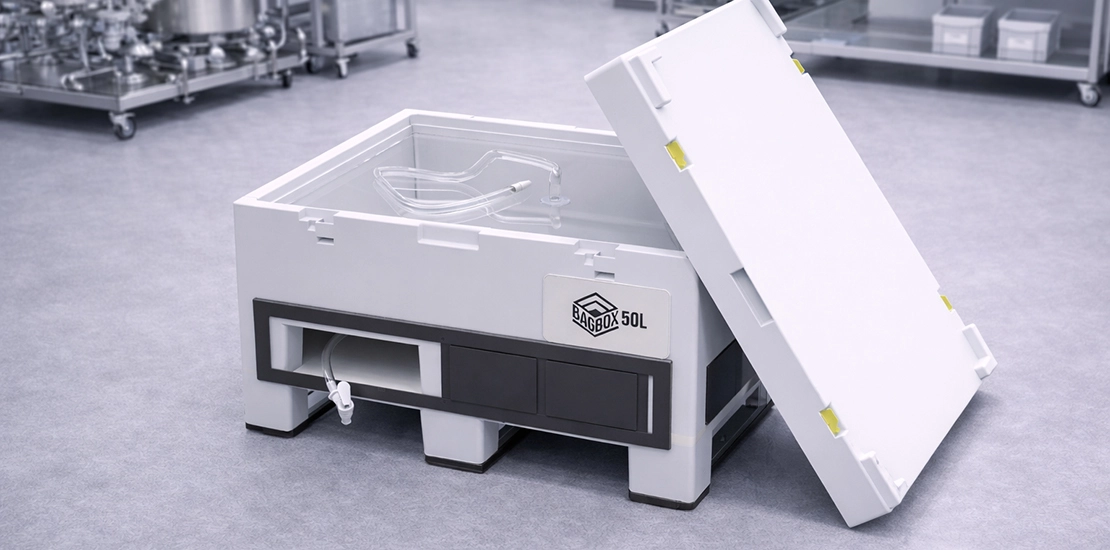
In the early days of bioprocessing, stainless steel was the default choice for fluid containment. It was durable, familiar, and capable of handling large volumes. However, as the industry shifted toward single-use technology (SUT) and agile manufacturing, the limitations of metal carriers became a significant bottleneck.
The transition to a bioprocess tote made from high-performance thermoplastic wasn't just a material change—it was an engineering evolution designed to protect the integrity of the modern fluid path.
1. Structural Physics and Deflection Control
The primary role of a bioprocess tote is to manage the immense weight of liquid media—often exceeding 1,000kg—without allowing the bag to "slump" or ports to shift. While steel is rigid, it is also unforgiving. Any minor dent or warping in a steel container can create "dead zones" or misaligned port openings that put mechanical strain on SUT bag connections.
Engineered thermoplastics, such as high-density polypropylene (PP), are designed with a specific modulus of elasticity that allows for "controlled resilience." Under load, these materials distribute stress more evenly across the bag surface. Our manufacturing standards utilize rib-reinforced wall structures that match the rigidity of steel while eliminating the risk of permanent deformation, ensuring bag geometry is maintained from the first liter to the last.
2. Eliminating the Cleaning Validation Burden
One of the most significant hidden costs in biopharma manufacturing is cleaning validation (CIP/SIP). Stainless steel containers require rigorous, documented cleaning protocols to prevent cross-contamination, consuming vast amounts of water, chemicals, and time.
By moving to an engineered thermoplastic tote system, facilities eliminate this burden. Unlike steel, which requires complex welding—potential sites for microbial harborage or corrosion (rouging)—our totes feature:
- Weld-Free Geometry: Seamless internal faces with smooth, radiused corners.
- Low Surface Energy: Thermoplastics are naturally hydrophobic and non-shedding, making them significantly easier to sanitize using standard cleanroom agents with zero risk of residue.
3. Thermal Stability and Process Security
A common misconception is that steel provides superior thermal stability. However, in "cold chain" or hold applications, the high thermal conductivity of steel can lead to localized temperature fluctuations.
Thermoplastics act as a natural insulator, providing a stable thermal buffer. This ensures that your single-use bag system maintains temperature consistency during sensitive storage phases, protecting the biological activity of the product and adding a secondary layer of process security.
4. The Material Comparison Framework
When evaluating infrastructure, engineers look for material stability across three vectors: thermal resistance, surface energy (sanitization), and mechanical deflection.
| Metric | 316L Stainless Steel | Engineered Thermoplastic (PP) |
|---|---|---|
| Density (g/cm³) | ~8.00 | ~0.90 |
| Thermal Conductivity | ~15 W/m·K | ~0.20 W/m·K |
| Surface Energy | High (Hydrophilic) | Low (Hydrophobic) |
| Maintenance | Passivation/Rouging Removal | Zero |
5. Facility Agility and Ergonomics
As cleanroom footprints become more expensive, the ability to maximize floor space is a critical KPI. Stainless steel units are fixed-volume obstacles; they take up the same amount of space whether full or empty and can weigh upwards of 150kg.
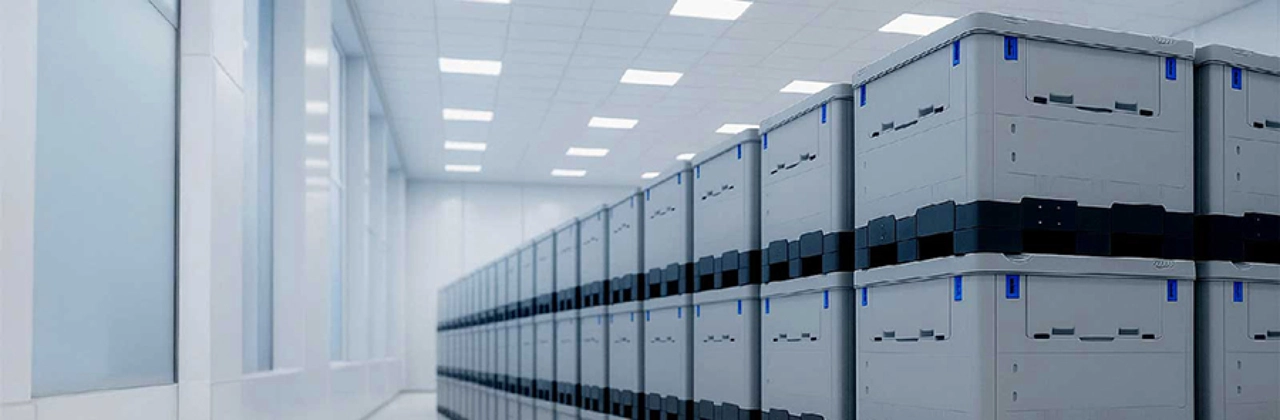
Our thermoplastic bioprocess containers are designed for "Execution Mobility." Being approximately 60% lighter than steel and often nestable or stackable, they significantly reduce the physical strain on operators while optimizing storage zones. This allows teams to reconfigure a suite in minutes rather than hours, supporting the high-speed changeovers that define modern CDMO success.
The Original Authority
As the inventors of the thermoplastic tote system, BagBox understands that the carrier is the primary defense for your sterile fluid. We don't just provide a container; we provide the execution infrastructure designed to stabilize your process and de-risk your production.
Ready to See the Engineering Proof? Our technical team can provide structural data and material certifications to assist with your facility validation. Request a Technical Consultation