Increasing Flexibility in Single Use Systems Requires Greater Execution Control
ISO 11137-1:2025 expands sterilisation flexibility for single use assemblies. As variability increases, execution during handling becomes the critical control point.
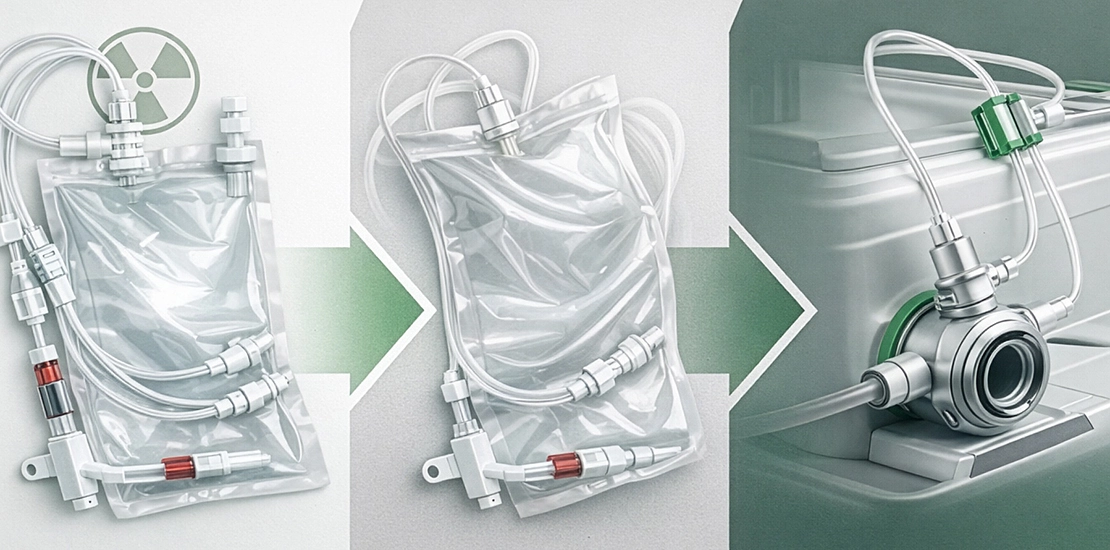
ISO 11137-1:2025 expands sterilisation flexibility for single use assemblies. As variability increases, execution during handling becomes the critical control point.
What Does ISO 11137-1:2025 Mean for Single Use Bioprocessing?
The 2025 revision of ISO 11137 introduces greater flexibility in the sterilisation of single use assemblies. Higher energy limits, expanded dose options, and broader application scope support wider adoption of single use technologies across biopharmaceutical processes.
At first glance, this is a positive development. Greater flexibility allows manufacturers to optimise sterilisation strategies, improve material compatibility, and increase throughput.
However, increased flexibility also introduces variability.
As sterilisation methods and material behaviour become less uniform, the way single use systems behave during handling becomes less predictable. Differences in irradiation, dose levels, and material response can influence how a bag performs once it is filled and moved through a facility.
While validation ensures sterility of the fluid path, it does not control how a filled system behaves during real world execution.
From Sterility to Execution
Once a sterile bag is filled, the primary risk no longer sits in sterilisation. It shifts to execution.
During filling, movement, holding, and draining, physical factors begin to dominate:
- how the bag holds its shape under load
- how the fluid drains from the system
- how tubing behaves during routing and connection
These are not theoretical concerns. They determine whether a process remains stable, repeatable, and compliant in practice.
As single use systems evolve, controlling execution becomes increasingly important.
Execution Infrastructure Around the Fluid Path
In many facilities, the physical systems supporting single use bags have historically been treated as secondary equipment. Often considered containers or transport solutions, their role in process stability has been underestimated.
In reality, this layer functions as execution infrastructure around the sterile fluid path.
It governs how the bag behaves during handling, how the drain performs during discharge, and how tubing is routed and protected throughout the process.
As variability increases upstream, control must increase downstream.
Stabilising Execution in Practice
Execution infrastructure ensures stable conditions during handling:
- stable bag shape under load
- controlled draining during discharge
- protected tubing during routing and connection
These are the conditions required to maintain process stability in real world operations.
In cleanroom environments, systems such as bioprocess cleanroom totes provide controlled support during filling and drain down.
During movement and logistics, bioprocess transport totes protect the system from external stress, vibration, and handling variability.
Without this level of control, variability introduced during sterilisation and material selection can translate into inconsistency during execution.
With it, the behaviour of the system becomes predictable and repeatable.
Why This Matters Now
The evolution of standards such as ISO 11137 reflects a broader trend within the industry. Single use systems are becoming more flexible, more widely applied, and more diverse in design.
This creates opportunity, but also increases the importance of controlling how these systems are used in practice.
The next phase of single use adoption is not only about validating the fluid path. It is about stabilising the execution environment around it.
The Role of BagBox
BagBox provides execution infrastructure that stabilises sterile fluid handling from fill to final transfer.
Designed to be bag agnostic and engineered from bag drawings, BagBox systems support consistent bag geometry, controlled draining, and protected tubing across a wide range of single use applications.
Explore how this approach is applied across real-world bioprocessing solutions.
As single use systems continue to evolve, execution stability becomes a defining factor in process reliability.